


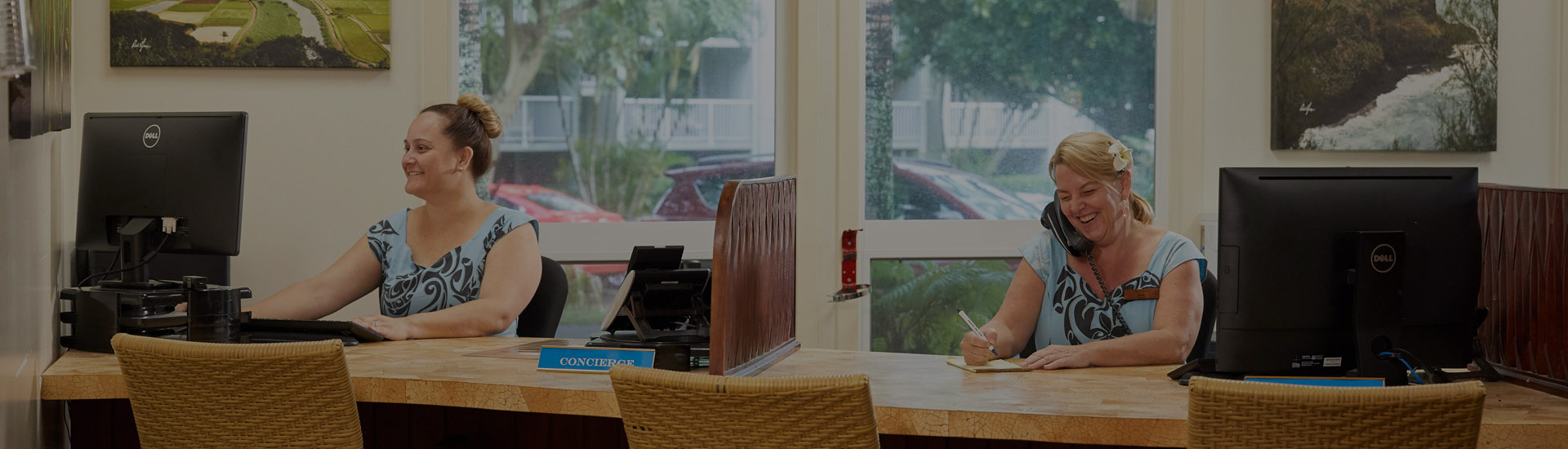
The Cliffs offers a true Concierge service with knowledgeable and dedicated staff who will ensure your time on Kauai is everything you want it to be. Whether it be helicopters, hidden beaches, trails off the beaten path, special dining arrangements or help creating a special occasion, our staff will make it happen for you.
While Kauai remains a popular vacation destination, visitors can still discover the hidden beauty the “Garden Isle” has to offer. As your personal concierge, we can advise you on the various activities available such as:
- An ocean cruise along the breathtaking Na Pali Coast
- A helicopter tour of the island’s sights
- A kayak adventure along a tropical river with a hike to a waterfall.
In addition to these ever popular activities, we can help you with some of the newer adventure activities as well:
- Golf (Preferred rates available for guests)
- Zip Line tours
- ATV Rides
- Tubing Adventures
- Chocolate Farm tastings and tour
- Hands-on taro farm tour
We also offer a wide variety of on-site activities:
- Ocean Bluffs Yoga
- Introduction to Scuba
- Lei Making
- Botanical tours
- and many more
We offer a full range of information services such as tee times, snorkel rentals, restaurant recommendations, as well as beach and driving maps. Planning a successful and memorable vacation starts with a phone call or email to one of our specialists. Summer and Holidays seasons are super busy on Kauai. We recommend making early reservations for your activities with us.
Our promise to you
You’re on vacation. Let us do the work and rest assured customer satisfaction is our goal.
Activity Booking & Information
Contact Cliffs Activities Concierge to receive more quality information on your tours and off-site activities. Call your experts at (808) 826-2005, or fill out the form below.
Contact Our Concierge

Video not found